AREAS OF KNOWLEDGE:
THE HUMAN SCIENCES
SYSTEMS THINKING

President Donald Trump oversees Operation Epic Fury at Mar-a-Lago, Palm Beach, Florida. March 1, 2026.
Image credit: White House photo by Daniel Torok
HYPERCOMPLEX AND INTERCONNECTED
In the introduction to the Human Sciences as an Area of Knowledge, we asked “What could be more complex and daunting than our attempts to study human existence and behavior? We acknowledged that the human sciences are hypercomplex and they—rather than physics and chemistry— could be referred to as “the hard sciences.”
The Human Sciences encompass Psychology, Social and Cultural Anthropology, Economics, Global Politics, Geography, and Environmental Systems and Societies. All of these IB subject domains have a distinct flavor, but there is considerable overlap. A family resemblance is that they all necessitate a diligent, systems thinking approach.
Systems thinking is also essential for understanding the interconnectedness, and inherent messiness, of global events as they play out in front of us. Time is a critical factor. Human endeavor is fraught with unintended consequences only revealed with the hindsight of historical perspectives.
“So, what is a system? A system is a set of things—people, cells, molecules, or whatever—interconnected in such a way that they produce their own pattern of behavior over time. The system may be buffeted, constricted, triggered, or driven by outside forces. But the system’s response to these forces is characteristic of itself, and that response is seldom simple in the real world.
”
Complex Adaptive Systems
What are they? Holistic hierarchy
Start living organism quickly expand concept to ant colony then ecosystems corporations cities nation states biosphere solar system
Operating system (OS): Caste system Legal system:
Simple components
Non-linear interactions
The whole is more than the sum of the parts
No central control. The self-organize. Distributed Control: There is no master controller; behavior emerges from the bottom up.
Emergent behaviors
Blind men and the elephant
HOLISM VS. REDUCTIONISM
CLASS ACTIVITY I — BLACK BOX COW
Blind men and the elephant
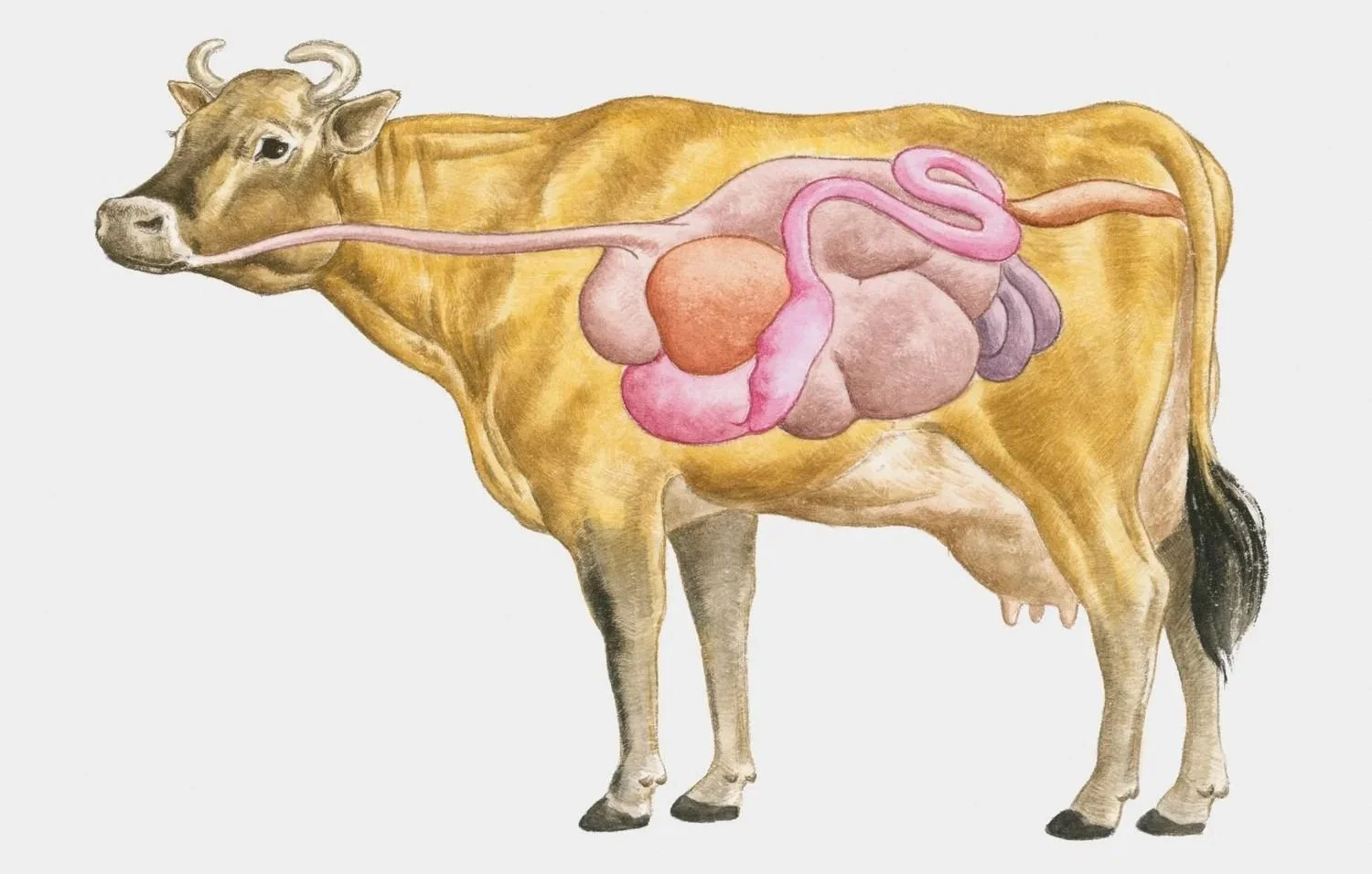
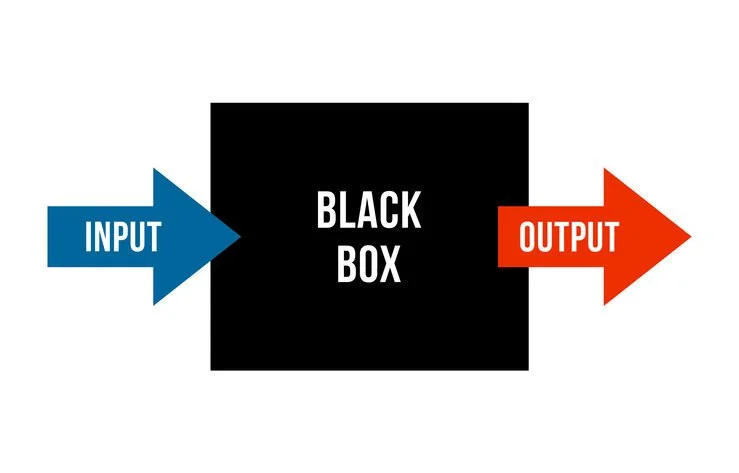
What goes in, and what comes out?
Class brainstorm generate diagram
Chemical and other energy exchanges and they make messes.
Complex system as a "black box," focusing only on measurable inputs and outputs while ignoring complex internal mechanisms. Simple cause-and-effect model where stimuli go in (energy, data, materials) and responses come out (products, services, waste, behavior).
CLASS ACTIVITY II — ANT COLONY SIMULATION
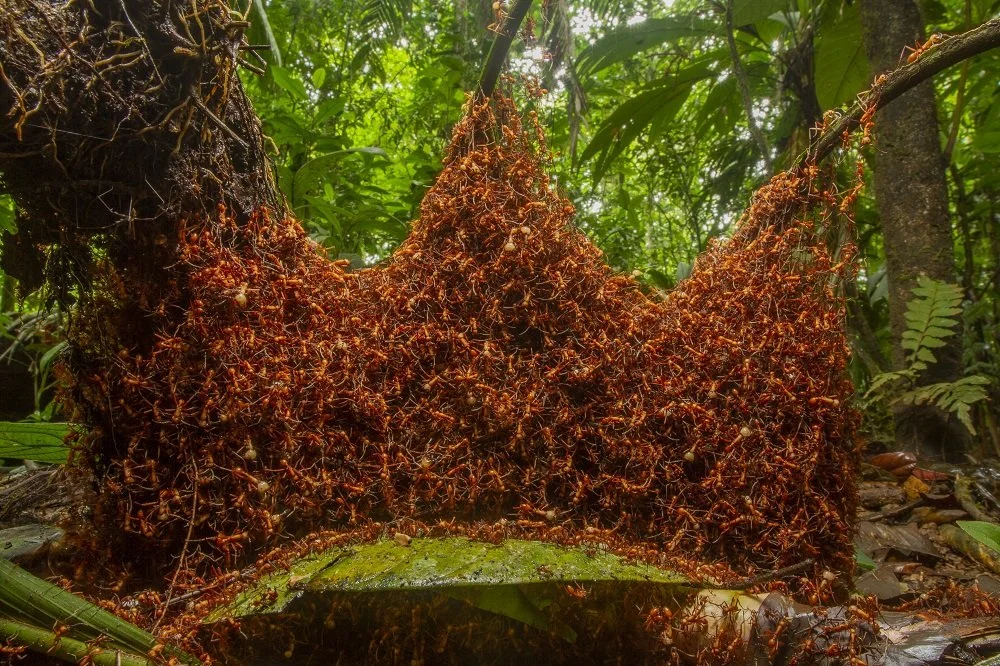
he award-winning photo shows a cathedral-shaped bivouac of army ants. The ants make the nest out of their own bodies by interlinking with one another. (Photograph by Daniel Kronauer)
the prestigious Wildlife Photographer of the Year competition. The award, issued today by London’s Natural History Museum, showcases the world’s best nature photography and wildlife photojournalism. Rockefeller University
1230 York Avenue
New York, NY 10065
“No one is in charge.
Ant colonies are built without forethought and without the aid of any single mind or any group discussion or consultation. There is no blueprint or master plan. Just thousands of ants working mindlessly in the dark moving millions of grains of earth and sand to create these impressive structures. This feat is accomplished by each individual ant obeying just a few simple rules mediated by chemical cues and other signals, resulting in an extraordinarly coherent collective output.
It is almost as if they were programmed to be microscopic operations in a giant computer algorithm.”
CLASS ACTIVITY III — WHY IS A LIVING CELL LIKE PARIS AND NOT LIKE PARIS?

Paris at night.
Photo credit: Paris Guide
CLASS only really tough generative questions.
Why is…?